COSTÃO DO PÃO DE AÇÚCAR TRAIL, CLIMB IN SUGAR BREAD
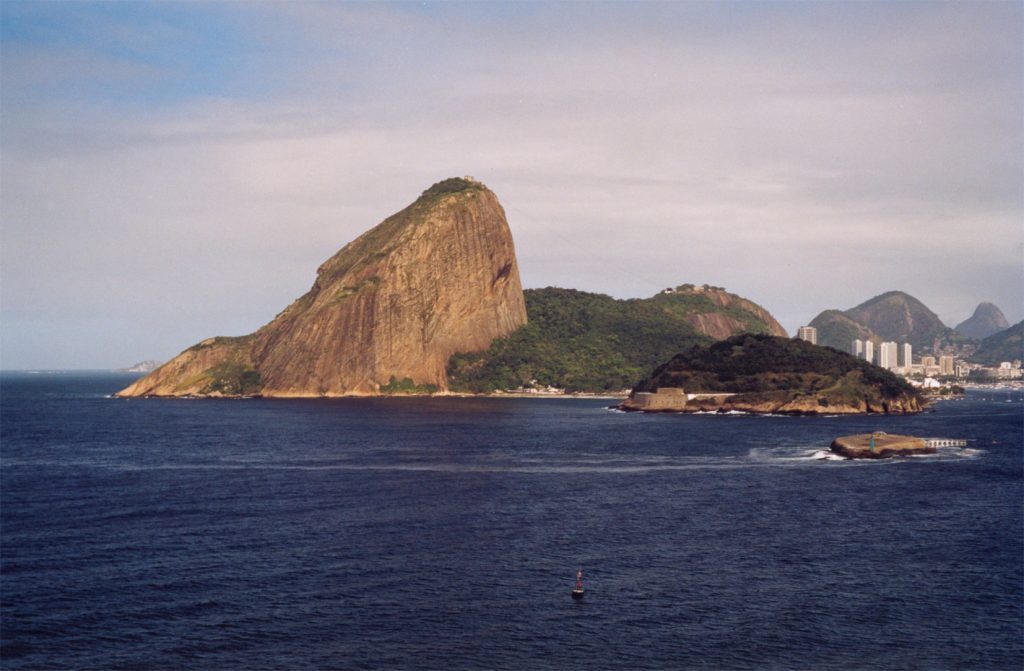
The Sugar Loaf peak is quite representative because it is the gateway to the city of Rio de Janeiro, it is a historical, geographical and tourist landmark. This destination is a must for anyone visiting or living in the city. It is 396 meters high and can be climbed in many directions, some easier, some harder. There are no hikes to the summit. The easiest way is called Costão do Pão de Açúcar.
The costão trail begins with a beautiful view of Guanabara Bay and the city of Niteroi and gradually other landscapes are showing. The path runs along the east face of the mountain and begins at the end of Claudio Coutinho Trail.
The walk consists of stretches of earth, stone ramps and some beautiful lookouts, with a small section of climbing. The route to the top needs a little more experience, so a guide who is also a climber is indispensable, as he has a part that needs ropes. If you are already experienced in climbing, it is only a small 20 meters stretch, considered basic level climbing, you will have no difficulties.
No previous mountaineering skills are required, just a lot of willingness and willpower to face the long climb over steep rocky terrain. A great opportunity for those who have never climbed to have a first contact with the sport.
After climbing, the route continues until reaching the lookout point of Philosopher’s Stone, which has a magnificent view of Copacabana Beach, Pedra da Gávea and Morro Dois Irmãos
When you reach the summit, you realize that all the effort was worth it, the place has a magnificent view; 360-degree view of the south of the city: Botafogo Cove, Flamengo Aterro, Cristo, Dois Irmãos Hill, Pedra da Gávea, Pedra Bonita, Copacabana, Tijuca Forest and much more most beautiful postcards of Rio de Janeiro.
The descent is made by cable car to the Morro da Urca stretch that connects the two mountains. From this point you have two options, go down the Morro da Urca trail or the cable car to Praia Vermelha (R $ 25,00 whole and R $ 12,50 half).
DCIM104GOPRO

STORY
In 1817, 39-year-old English climber Henrietta Carstairs became the first person to climb the coast. Only in 1912, the cable car was inaugurated, after just over three years of work and the loading of 4,000 tons of equipment and construction material to the top of the hills of Urca and Pão de Açúcar.
RECOMMENDATIONS AND USEFUL INFORMATION
Avoid driving on weekends and holidays, getting a spot can be quite complicated.
Avoid going after a rainy day.
Use only the planned routes, the use of shortcuts damages the vegetation. .
Collect the waste produced. Bring it back and deposit it in the dumpsters. Help preserve the environment.
On descent beware of the steepest sections.
Wear suitable and comfortable sneakers preferably with non-slip / anti-impact soles.
Along the way there are many obstacles like rocks, branches and roots, keep alert.
Avoid rising or falling too late, or near dusk, lack of visibility can make an accident easier.
Wear sturdy, comfortable clothes
WHAT TO TAKE?
Carrying at least 1.5LT of water in the backpack is always necessary. Put some fruits, cereal bars, even sandubas, sunscreen, glasses, camera. It is recommended to be well fed before starting the trail. Remember to bring a cap and insect repellent.
SAFETY EQUIPMENT REQUIRED
Ropes, Prams, Helmets and Carabiners.
DIFFICULTY LEVEL
Medium / Heavy.
DURATION
About 3:30.